
Hull Rupture Game Modes: All Six Explained
Hull Rupture has six modes at launch. Here is what Classic, Trade, Cursed, and Endless do, plus which modes are confirmed and which are still unnamed.
Hull Rupture ships with six game modes and four difficulty levels. The modes change the win condition or the source of pressure; the difficulties sit on top and scale the numbers. Only a few modes have been playable, so the list below separates confirmed modes from preview-only labels and unannounced slots.
The short version: Classic is the campaign, Trade removes combat, Cursed removes money, Endless removes the finish line, and two modes are still unnamed.
"Trade Mode — a new combat-free mode where alien attacks are replaced by economic pressure."
— Official source: Hull Rupture demo launch announcement
For the numbers behind each mode, read difficulty; for the hull you bring, read ships.
Cursed only makes sense once you know what money normally buys. One Classic run is the cheapest tutorial for the inverted economy.
Mode vs difficulty
These are separate choices, and confusing them leads to bad expectations.
- Mode changes the rules: win condition, pressure source, economy, or run length.
- Difficulty changes the numbers: enemy strength, resource scarcity, and possibly which galaxy nodes appear.
A mode can be easy or hard on any difficulty. Cursed on the lowest difficulty is still a different economy from Classic on the highest. Pick the mode for the experience you want, then pick the difficulty for the challenge.
Confirmed modes
| Mode | Status | Core change | Best for |
|---|---|---|---|
| Classic | Playable in demo | Survive 20 waves, defeat the final boss | First runs; the default campaign |
| Trade | Playable in demo | No alien attacks; economic pressure | Learning production without defense |
| Cursed | Shown in demo | No money; humans are currency | Experienced players; economy challenge |
| Endless | Announced for release | Removes the 20-wave finish; own settings | Long-term ship building |
| Combat-focused mode | In development | More combat emphasis | Players who want the tower defense to lead |
| Sixth mode | Unannounced | Unknown | Unknown |
The six-mode count comes from the store page and the developers' Next Fest recap. The names above are the ones with public evidence. The sixth slot is not a secret code; it is simply unrevealed.
Classic: the 20-wave campaign
Classic is the mode the demo teaches. You start with a small ship, build production, travel the galaxy, and survive 20 attack waves. The run ends with a final boss.
The rhythm is:
- Build economy between waves.
- Scout the next wave's landing zone.
- Repair and expand after the fight.
- Choose a galaxy route that supports the next build.
- Repeat until the boss.
Classic is the best first mode because it teaches every system. It is also the mode most affected by the 20-wave timer: every detour on the galaxy map is a wave you are not spending on production.
The campaign frame — decode the Galactic Union network, reach the alien homeworld — is the same in Classic. The mode's identity is the wave count and the final boss, not a separate story.
Trade: no aliens, only logistics
Trade removes alien attacks and replaces them with economic pressure. There are no invaders; the challenge is production, logistics, and the consequences of your choices.
That makes Trade the best mode for learning the economy. You can build a production chain, watch the resource flows, and experiment with modules without a wave timer killing the run. It is also the mode for players who like factory games more than tower defense.
Trade is not "Classic without challenge." The economic pressure is designed to replace the combat pressure, which means the failure state is a stalled or bankrupt ship rather than a breached airlock. The demo includes Trade, so you can test whether that loop holds your attention.
If you are new and combat makes you anxious, start with Trade for two runs, then switch to Classic. The production habits transfer; the defense habits do not.
Cursed: humans are the currency
Cursed removes money. Every purchase is paid in humans, which makes population the economy.
That inverts the usual priorities:
- The Reproducer becomes the most important room, not just a strong one.
- The Bioreactor becomes a luxury; converting humans to fuel is spending your currency.
- Events that award humans become premium.
- Selling kits and skipping shops become population-saving moves.
Cursed is not a harder Classic. A Classic player who converts surplus humans and banks tokens will starve a Cursed run. The mode rewards a tight population budget and a clear answer to "what do I actually need to buy?"
The demo's ship-select screen shows Cursed as a card, but the mode's full balance is a release question. Treat the demo version as a preview, not the final economy.
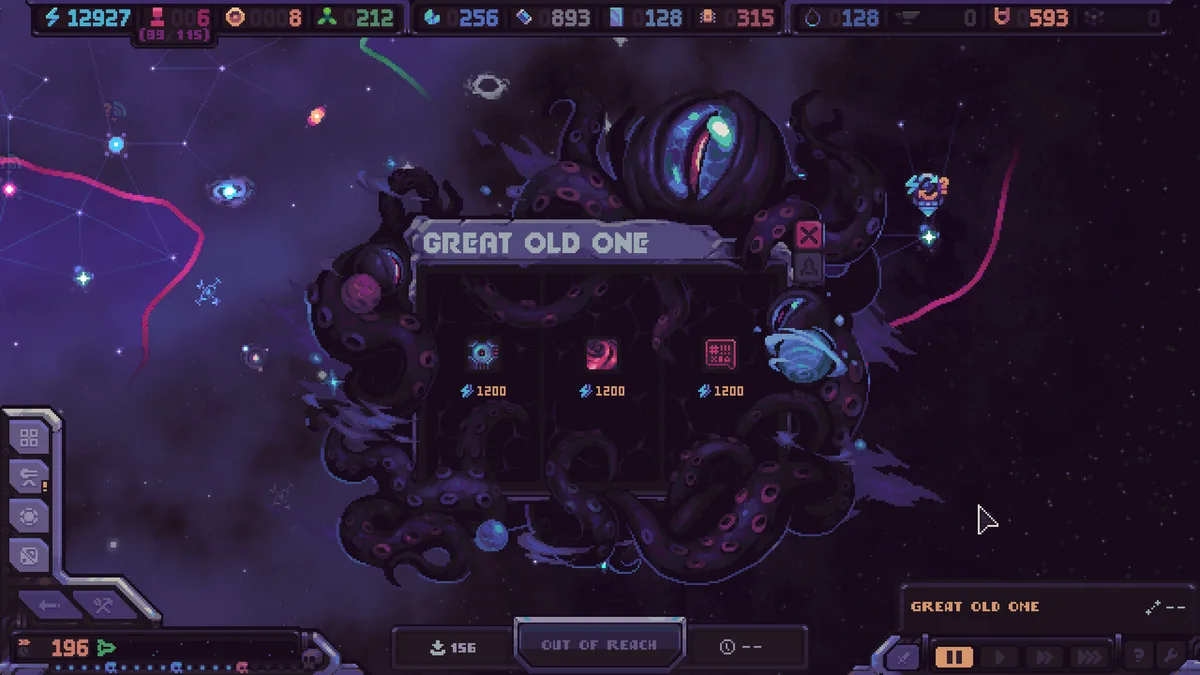
Endless: the run that does not end
Endless was announced as a separate mode at release, with its own settings. It removes the 20-wave finish and lets the ship keep growing.
That sounds like the ultimate builder mode, and it is also the mode most likely to expose balance problems. A ship that can survive wave 20 may not survive wave 60, and the economy that supports 20 waves may not scale to 100.
Endless is the mode to watch after launch. It will show which modules and modifiers scale, which turrets fall off, and whether the ship-building system has a ceiling. The demo's late-game screenshots show waves in the 70s and 80s, which suggests the developers have tested beyond the campaign.
The combat-focused mode
Konfa has said a combat-focused mode is in development. The Next Fest recap mentions it alongside the three ships and six modes, but does not name it or describe its rules.
The design goal is likely the opposite of Trade: more fighting, less economy, or a mode where the tower defense is the main loop rather than a layer on top of production. Until it is shown, do not plan around it.
Preview-only mode names
An April preview build listed mode names that have not appeared in the launch material: Conquest, Uneventful, Pure, and Impossible. They may have been renamed, merged, or cut.
Do not treat them as launch modes. The confirmed launch count is six, and the named modes are Classic, Trade, Cursed, and Endless. If a preview name reappears in the release build, it will be in the mode-select screen, not in a store description.
Which mode should you play first?
| Player type | First mode | Why |
|---|---|---|
| New to the game | Classic | Teaches every system with a clear finish |
| Factory-game fan | Trade | Removes combat pressure; focuses on production |
| Roguelite veteran | Classic, then Cursed | Learn the economy, then invert it |
| Builder | Endless (at launch) | No finish line; test long-term scaling |
| Tower-defense fan | Classic, then combat mode | The combat mode is not available yet |
Play Classic at least once before Cursed. The mode's economy only makes sense if you understand what money normally buys.
Sources and further reading
Related
- Why difficulty is a separate axis
- Which ship to use in each mode
- The build order that works in Classic
FAQ
How many modes are in Hull Rupture? Six at launch. Four are named: Classic, Trade, Cursed, and Endless.
Is there a multiplayer mode? No. The game is single-player only.
Does Trade have any combat at all? No. Alien attacks are replaced by economic pressure.
Is Cursed a difficulty or a mode? A mode. It changes the currency, not just the numbers.
Can I change mode mid-run? No. The mode is chosen at the start of the run.
Is Endless available at launch? Yes. The developers said it becomes a separate mode at release.
More Hull Rupture Guides
Hull Rupture treats humans as a resource. Learn where to assign them, when to convert them in the Bioreactor, and how to avoid a population death spiral.
How Hull Rupture modifiers and artifacts work: shop vs event pools, confirmed effects, conditional bonuses, and which builds are worth committing to.
Hull Rupture module guide: confirmed production rooms, adjacency bonuses, module kits, selling duplicates, and placement rules for a stable ship.
Hull Rupture launches on PC, Mac, and Linux on November 4, 2026. There is no PS5, Xbox, Switch, or mobile version. Here is the full platform status.
How Hull Rupture's energy economy works: generator staffing, module upkeep, brownout recovery, and when to stop building before the ship stalls.
Hull Rupture has no full reviews yet. Here is what the April preview build praised, what it criticized, and how the demo's reception frames the launch.
Hull Rupture releases November 4, 2026 on PC, Mac, and Linux. Here is what Steam has confirmed about the price, launch time, demo, and day-one content.
How repair works in Hull Rupture: breach priority, energy costs, repair module placement, and when to abandon a damaged section instead of rebuilding it.